 Shop Local Chicago is gaining steam so I am reposting special events here with an active link for Unwrap Chicago this holiday season in support. Here’s a post I wrote in 2011 about the Buy Local movement and not much has changed except we need our local businesses more than ever and I share local information every day through my @ChiNeighbors Twitter feed and Chicago Community Showcase Facebook page. This Continue reading Shop Local Chicago 2014
Category: Chicago
Hilarious skit by Gene Siskel and Roger Ebert for the Chicago Gridiron Show

Sponsored by the Chicago Headline Club, the Gridiron Show skewered local politics and media from 1987 to 1997. A labor of love by a kooky bunch of journalists, pr peeps and politicians, it was also a benefit for student scholarships. This bit between Gene Siskel and Roger Ebert is laughing out loud funny. Writing is attributed to Adam Ritt, with tweaks by the critics themselves. The video is out of synch but listen to the audience response.
Related articles


Hello it’s me! Buy local

435Digital, Chicago Tribune.
I went for a walk in my old neighborhood the other day. I lived in Chicago’s Lakeview for about ten years. It’s a fun place with plenty of foot traffic, all kinds of shops, ethnic eateries and lots of cafes. It’s a prime destination for Black Friday.
The Roar of the University
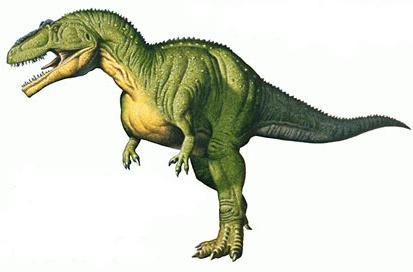 I managed to catch a few minutes of the end of the PBS special Dinosaur Wars the other night. The story is famous. Two brilliant paleontologists— Edward Cope and O.C. Marsh — over a three decade rivalry separately yet together created a vast collection of fossils and body of scientific work that formed the backbone of Darwin’s theory of evolution, as well as our most beloved childhood monsters — dinosaurs.
In the final chapter of Dinosaur Wars, information was leaked to a journalist, whose coverage played out the story in dramatic headlines over a period of weeks. The story rose to a crescendo of partisan politics, erupted into a bleating Congressional squall and then eventually switch-backed, knocking the two great men on their respective professional behinds, where they steeped in their individual flavors of bitterness until they reached their miserly and sickly demises shortly thereafter. As a byproduct, their behavior created a cul de sac in advancing the scientific mission of the U.S. Geological Survey.
The PBS biography of these two men on PBS says:
While the feud between Cope and Marsh consumed the scientists’ lives and damaged their careers, the amount and quality of bones they each collected became the foundation of paleontology in America. Cope left behind 13,000 specimens, and Marsh’s comparable collection proved to be “the best support of the theory of evolution,” according to a personal letter from Charles Darwin himself.
Their work was inspired. Their feud a waste. And journalism was a pawn in their game.
Spin forward to today where different kinds of dinosaurs wander the land. Our industrial age institutions — governments, universities — look for green shoots in a knowledge age frontier. How will they scale their lumbering forms to this digital, media-steeped landscape? Will they understand that there are enough bones for all of them?
That brings me to the question David Cohn has asked us journalist/ bloggers to discuss in this revival of the Carnival of Journalism. 
One of the Knight Commission‘s recommendations is to “Increase the role of higher education…..as hubs of journalistic activity.” Another is to “integrate digital and media literacy as critical elements for education at all levels through collaboration among federal, state, and local education officials.”
I see today’s university as a place where ideas are researched, published and vetted in accordance with standards, and as a place where discourse and push-back from opposing points of view is encouraged, required, public and communicated through numerous media channels. As an active hub of journalism, the university is its own news room. Journalistic communicators working in the university newsroom showcase knowledge and ideas, host the conversation, and understand that the university’s contribution to the world is knowledge, not public relations.
So my point of view asks: What would Dinosaur Wars look like today if the two scientists had not been working in institutional silos? Cope and Marsh would still not have liked each other, but their academic differences would have been aired openly and the press would have been manipulated less.
Since I’ve been talking with entrepreneurs more than college kids these days, I asked Mike Reilley, Online Journalism Instructor at DePaul University, College of Communication, for his opinion of the media literacy issue.
“Universities move at a snail’s pace to adjust curriculums sometimes. They want to stay true to their foundational courses, which is fine, but it stunts growth and change,” Reilley replied in an email. “Technology has revolutionized communication at a core level, and we have to re-think teaching it. Not just to communications or journalism majors, but to everyone.”
In his classes at DePaul, Reilley embeds the use of Twitter, Foursquare, blogging and other digital tools as they emerge. He asks his students to think critically and to explore views on an issue and then justify their points of view. As part of their classwork, Reilley requires his students to build and report on a website, The Redline Project.
“Media literacy can be taught across any discipline in a college environment. Just as students are required to take core courses in their field of study or overall basics, a media literacy course could easily be integrated into a curriculum.”
“Twenty-five years ago, when I was an undergraduate,” Reilley says, “such a course probably wasn’t necessary. But with the emergence of the web and cross-platform mediums, including the ability for anyone to publish, [students] require a new level of critical thinking skills.”
“Anyone with a Twitter account knows this. Should I retweet the link or not? Should I retweet what someone said? Is the information I’m forwarding or sharing credible. What to do?” Reilley says. “If technology gives everyone a voice, we at least need to teach them the fundamentals of using those tools correctly.”
I agree. I developed sea legs in the twitter and blog worlds by using these tools. That is the only way. But my personal radar that detects credible and high quality information has developed over a lifetime of reporting. How to teach that?
Social Dev Camp Chicago
You can also take a look at the Event Weave.

To get me talking ask me about: Would you like to hear my idea about how new technology could be used for measuring wealth as it is created and circulated in neighborhoods? And how the collected metrics could be translated into a driver for foundation investment.
I’d like to build a newsroom delivering information for specific communities of interest. Foundations would fund it in part with investments. The return they would expect would be decided by metrics of community wealth and community connectedness.
The Beaches of Rogers Park
the beaches of rogers park
I’ve seen sand in blue and red and brown reflecting the seasonal light,
and waves in red and blue and black and churning white,
sluggish with crusted mandalas of ice.
I’ve seen wind rock the trees, working their many colored falls.
The same trees for years and years,
old trees, new trees, slow growing trees,
elms and maples and catalpas and trees of heaven,
bowing and shaking like wooden rattles
in the charged wind.
On the long, distant side of Pratt Ave. beach,
on the pier’s North side,
three willow trees anchor the sand.
Their branches a home for buzzing insects.
Their roots restrain the rising water,
The rising water of
the lake that owns the coast here,
the lake that rises and takes back the paths and park benches in winter and spring,
the lake that is the spirit of this place called Rogers Park,
this place where I have always lived.
As a child,
As a child,
my feet slapped soft, oozing sand
the length of the lake from the stained-glass catacombs in the basement of Loyola’s Church
to the happy ice-skating place at Tuohy.
As a child, I ran and skipped the length of the lake,
holding my breath while flying past the sign that said
“No Trespassing-Private Beach”
by the brick building at North Shore, where women
with long dark hair
and red nail polish on their toenails sunbathed on their porches
while their dark hairy-chested husbands barbequed
and said “Scram,” if you lingered too long,
hands clasped behind your back,
looking hungry.
At North Shore
At North Shore,
concrete, giant steps
challenged a child’s short legs to descend,
and once you beached on the sand
you faced a long trudge through the burning sinking pebbles
before the slippery, silky water licked your naked toes.
The beaches of my childhood,
the beaches of my childhood soon stretched into adolescence
where the ritual exodus to the lake
gained power with each street crossed in East Rogers Park
as you called to your friends.
“We’re going to Albion!”
You joined one by one, sometimes walking arm in arm, and singing
“Doo, wah, Ditty, Ditty, Dum Ditty, Do!”
until you were a pack,
a pack of 10 or 12 or 18 or even more.
A pack of fresh-faced, chattering Catholic girls.
You walked past two-flats and houses
and past large courtyard apartment buildings
“Forward, east! ”
past furry, crew-cut lawns
and tailored gardens that were always being watered,
and you usually visited silently
the house of a friend grounded by her parents,
pulling yourself up
“Hurry up. Don’t get caught!”
peeking over the tall fence, waving,
then dropping to the ground giggling as you ran away.
Or you traveled the gangways,
tiptoing at the places you knew like traffic lights,
the places where grouchy old people would yell
and startle you for startling them.
You could easily travel only the gangways
each and every one that you knew by heart
and that everybody knew by heart like some secret highway
for high-top Keds, army boots and saddle shoes.
Forward East!
past two flats and houses until the black asphalt stopped
and neopolitan flavors of blue and brown rose to greet you at Lake MIchigan’s edge.
At Albion Beach
At Albion Beach
Budweiser abuse bred violence,
frisbees twirled and spun
all of the day and all of the night,
and the older boys drank too much mescal
and the older girls got into trouble
on the rat infested rocks
watching the submarines.
Before lights were put in to protect the park,
the only protection the boys and girls needed was the hushed sucking of the peaceful waves.
Bonfires were built and burned in the very darkest night
and when the boys and girls swam at night
they would take off their clothes
if they were wild enough
or if they didn’t care what anybody thought
if they were caught naked
in the sweeping headlights of a car.
It was there
It was there
where first cigarettes were smoked,
first whiskey seals broken,
bras first unhooked,
flies first fumbled
and then hands –no heads were ever used
hands busy groping,
groping awkwardly,
groping as they found their way
to the back door knocking at the Granada Theater,
where the ushers were your friends
and they let you in to see the first-run movies free.
There in the gold and red velvet balcony,
boys and girls auditioned to be men and women,
and more whiskey poured from half-pints,
and boys dropped their blue “bomber” jackets
trampling them with their muddy, steel-tipped boots,
soles hard-packed with frozen sand from Lake Michigan’s beach.
And then really drunk,
really drunk.
the boys would hit the streets
falling down and fighting,
brother upon brother,
until the neighboring gangs heard something was up,
heard about the action.
And soon, a hundred, midnight-blue zippered jackets lined up
to fight in the dank fog
at the chilly lakefront,
hitting out with rank rage,
a drunken rite of passage,
a rumble,
the fight between adopted Irish families
that claimed turf limits at Hartigan Park.
One night a stranger, a black man,
wandered onto Patch turf,
and I watched handfuls of his shredded black hair
erupt from a plunging pummeling huddle of blue-jacketed boys
and then drift to the ground where it rolled up the sidewalk,
circling itself over and over like forlorn miniature tumbleweeds.
“Nigger,”
The boys said.
And you knew the world was bigger than Rogers Park,
and things more exciting and romantic
than the submarine races at Hartigan Park would call you,
and many beautiful things would happen
that could blow away the ugly smokey thoughts that rose from Connolly’s Bar
and tarred the racist smiles of the young men there
Their eyes already ached alchoholic red.
And you knew that love knew no color
and that war was wrong
and that adults had heavy hands and even heavier hearts that they’d press on you
to hold you back and down.
If you let them.
There was escape, there was a place.
Past the sea wall at North Shore, past the frat house on Columbia,
past the new breakwater,
lay delicious and different beaches
teeming with older teen-agers
and men with long hair and beards and handsome mustaches,
and women too.
Women who wore peasant dresses,
but no bras or shoes
and slept in the bushes.
They made love in the bushes
and hid from police during the night.
The park was theirs they said.
“Take back the park.”
And they sold all kinds of things during those hot muggy summers of drug love,
they sold illicit goods from the open trunks of their cars at Morse Ave.’s Pill Hill.
They swarmed the close, mossy street like moths crashing in the white street light,
they peddled their wares,
tangled, pungent branches,
leaves and buds
and rainbow colored capsules
in shimmering, see-through sandwich bags,
and micro pieces of puttied sky wrapped in tin foil.
The long-haired mustached men sang.
“Chocolate mescaline, peyote, man.”
And they looked like pirate princes
and the women looked like princesses of a lost promised land,
floating by in their billowing dresses,
bare breasts, soft, pressed against the thin, gauzy cloth,
against the thin, tender cloth of their gowns
native to some distant, crowded place where veils hid women’s faces from men’s eyes.
In the carnival nights at Pill Hill
anything could happen and it always did
and that’s why the police came every night to clear the park
and beat the bushes.
But hiding places were plenty,
and the police couldn’t reach them all.
The black horizon of the lake,
the longest stretch of beach bowing far out from the walk was empty,
and distant from the path of a patrol car,
and the police never used their legs.
So, there,
on a cool, fragrant summer midnight,
you could hide by the ink of the lake, snuggling in sand until morning
when the sun rose flamingo pink and blinding
from the cobalt-turning-turquoise water,
reflecting,
reflecting
the orange light in blinding stripes of gold and silver.
The sun burned spots into your eyes,
spots seered like white flies into your eyes,
fantastic insects caught
in the sticky fiery surface
of the blazing, brilliant horizon.
And in the summer days and dusks,
guerilla theater, and Free Street theater players roamed, handing out props to any who’d play,
and guitars strummed,
and bells rang on ankles,
and incense burned
and often there was a belly dancer,
and hundreds of people – all young and mostly white and long-haired.
And you were one,
one of them, one with them finally.
One night, hundreds of people gathered under the street light and waved their arms in unison,
shaking their fists at the Park District curfew sign.
“Park closed at 10:30”
Hundreds of frustrated fists slammed the air together that green heavy night.
And the sign came down amidst cheers and confusion,
and the sound of police on the bullhorn.
And you ran home after curfew, arriving at your parents’ house
breathless that night,
what a night,
that night you’d kissed a red-haired boy
He had said you were beautiful
You’d held hands with a wigged out girl from school
who’d seen Beethoven’s Ninth symphony expressed
in perfect musical notation in the lightning-filled sky.
You could barely sleep waiting for the morning,
when all the excitement of the promised land would begin again.
And you swore to yourself
that you would toughen your feet so it was easy to walk barefoot,
and wear granny glasses and a floppy hat
and never, ever, ever wear a bra.
You would ditch your shoes behind your mother’s favorite bushes,
tomorrow,
in the morning,
and ready yourself for the world outside,
for the beach in Rogers Park.
Today
I practise Tai Chi in the autumn sun by the lake,
Carry Tiger to the Mountain.
I lift my hands, palms up to the burning mid-day sun,
and then drop them flat, like a gull drops its wings settling in tall, scratchy dune grass.
Around me brown and black and white babies play,
and their mothers speak clicking, clattering
rolling poetry in languages I’ll never know
as they picnic in circled dozens under the trees, Krishna cymbals ringing,
passing dishes of dried fruits and nuts
from hand to brown hand.
On the park benches gold teeth flash.
“Bam, Bam Nyet. Bam, Bam Nyet”
Boomboxes broadcast rap at the basketball courts
where bottles of Night Train pass with no lack of lip,
“Hey Bro! Pass it this way”
bomber jackets and steel-toed boots
replaced by baseball caps and baseball bats and guns.
And you’re filled with wonder at how
love knows no color,
and you know that war is always wrong,
and you lift your hands and heart
lightly
to the sky.
Copyright 200-2001. Sduros Communications.